
Lapis Lazuli Properties, Benefits and Historical Significance

Updated: Sep 7

In this article:
Lapis lazuli is most recognised for its deep, vibrant blue colour and golden flecks, which ancient civilisations compared to the sky and oceans. Prized for its mystical properties, lapis has long been used in jewellery, decorative objects, cosmetics and paint. The gemstone was in such high demand that it was once deemed to be more valuable than gold, and it remains a popular choice for every crystal enthusiast's collection.
In this article we explore the properties, benefits and cultural beliefs associated with lapis lazuli throughout the ages.

Facts and History
Stone: Lapis lazuli
Colour: Blue
Month: September, December
Birthstone: Sagittarius, Libra
Chakra: Third eye, throat
Lapis lazuli is composed primarily of the mineral, lazurite, which belongs to the sodalite family and gives it its intense blue colour. It also contains diopside, calcite (white streaks) and pyrite (golden flecks).
The name lapis lazuli translates as "blue stone". It's formed from the Latin word "lapis" (stone) and the Persian word "lāzaward" (blue). Lāzaward is the root of both the English word "azure" and medieval Latin "lazulum", which mean heaven or sky. This is perfectly in line with the stone's qualities.

Lapis Lazuli Tumblestone 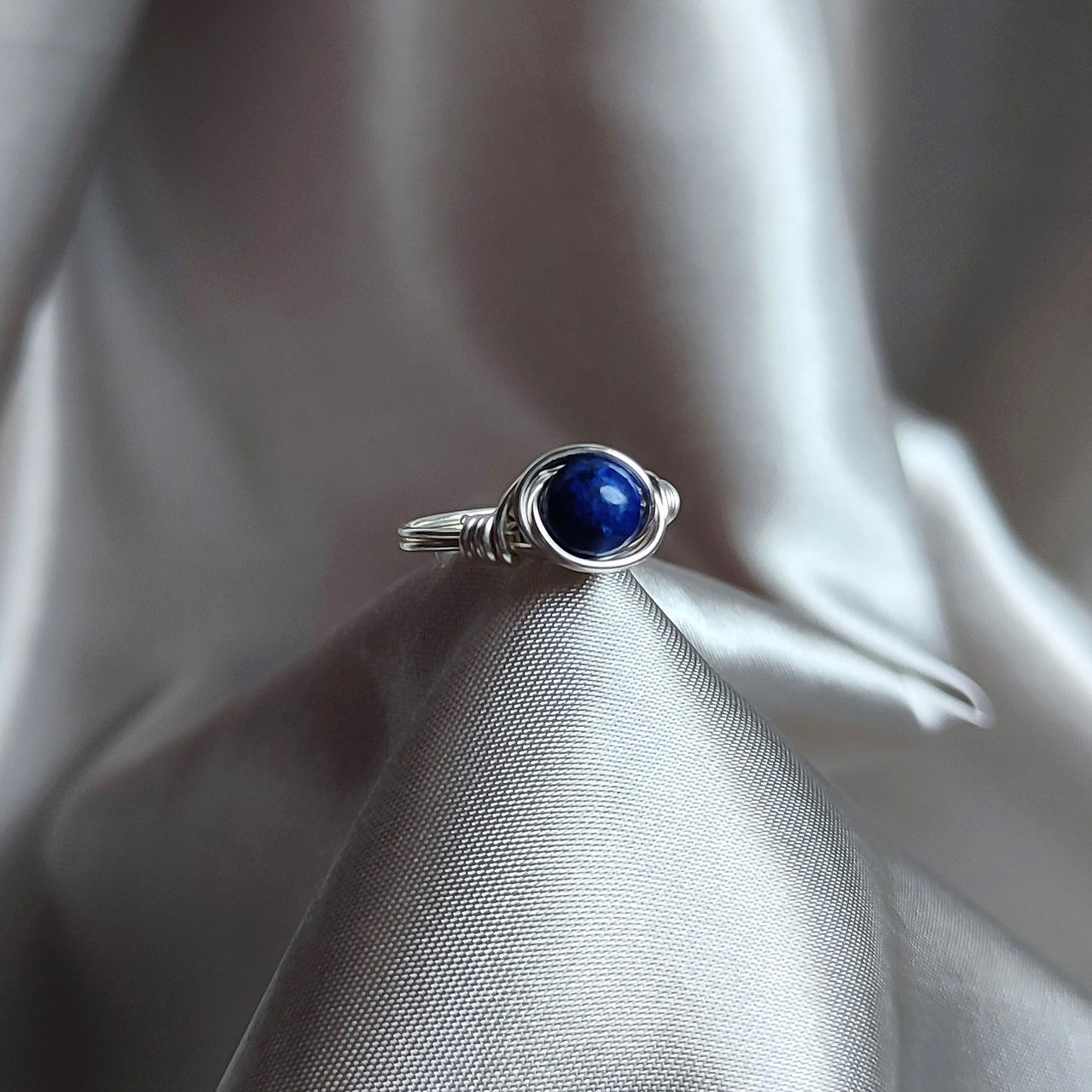
Lapis Lazuli Wire Wrapped Ring 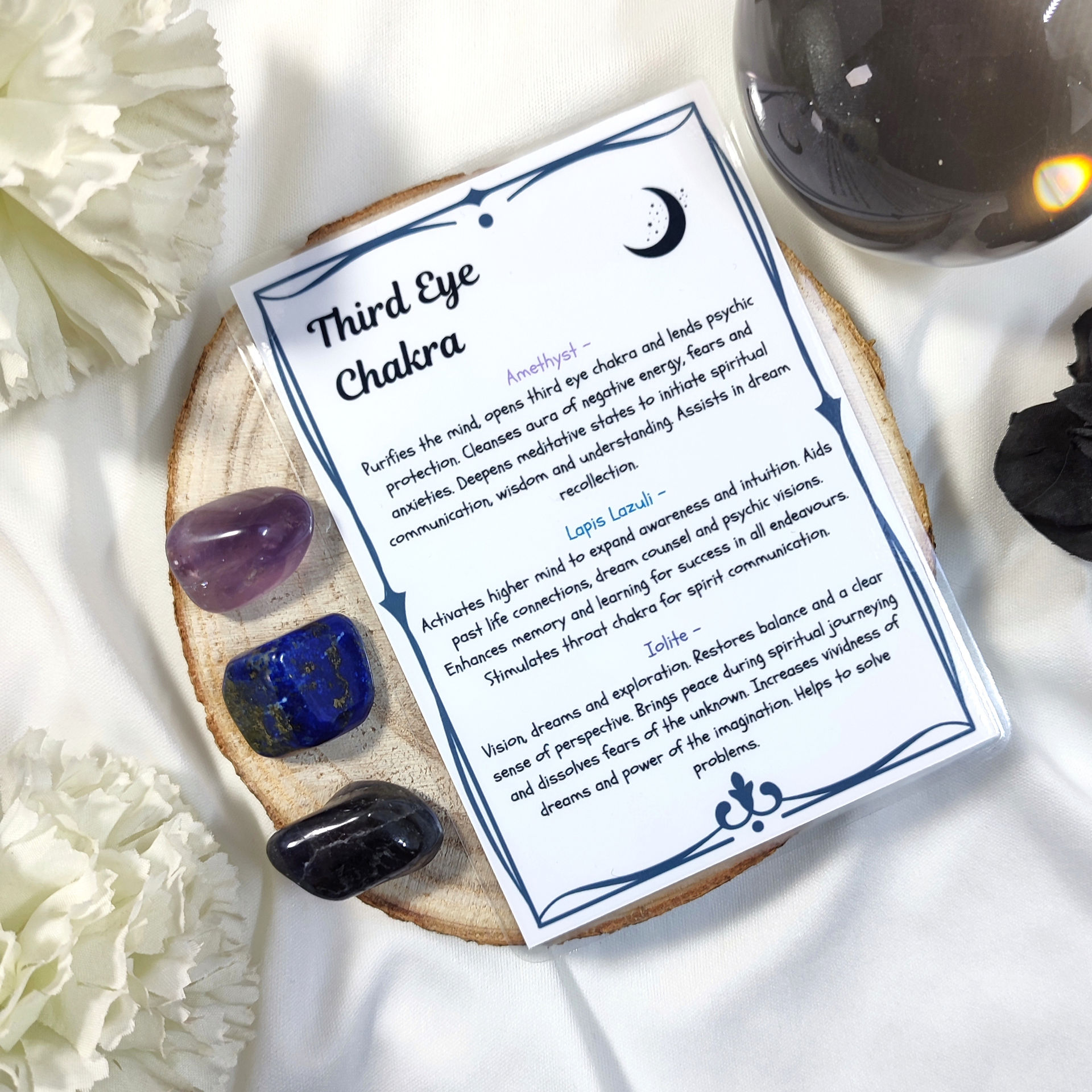
Third Eye Chakra Crystal Set 
Cleopatra Crown 
Psychic Ability Gemstone Pendant
Lapis lazuli is mainly found in Afghanistan where it's been mined for around 9,000 years, making it a much sought-after stone with a rich and magical history. It's also found in Chile and Russia, with smaller quantities mined in Pakistan, Mongolia, Italy, Canada and the USA.
Lapis lazuli is rated between 5 and 6 on the Mohs scale of mineral hardness, making it a little softer than other crystals and more prone to scratches. However, it's a highly polishable stone that's still widely used in jewellery making, ornaments, carvings and other decorative objects.
During the Renaissance, lapis lazuli was ground to make the pigment, ultramarine, for oil paintings such as those by Michelangelo. Lapis paint was also used in the famous Girl with a Pearl Earring painting.
A favourite amongst the Ancient Egyptians, powdered lapis lazuli was used as eyeshadow by Cleopatra herself. The iconic mask of Tutankhamun was inlaid with lapis, as were many amulets and ornaments of the time. It was also popular in Persia and other regions across Asia.
Lapis lazuli was often referenced as sapphire in the Old Testament, but since sapphire wasn't yet known in the ancient world, it was likely that lapis was the fifth stone in the original breastplate of the High Priest.

Crystal Properties
To this day, lapis lazuli remains a favourite gemstone for psychic work, but it's far more versatile in its properties.
Mental and Emotional
Lapis lazuli is known to open the mind to new ideas, expanding awareness and heightening perception. It's associated with promotion, success, wisdom, memory and learning. Known as the "stone of friendship", its connection to the throat chakra aids communication and self-expression. Lapis is often used by people in the performing arts, creative, legal, medical and executive fields.
Physical
Lapis lazuli is thought to improve blood circulation and cardiac rhythm, as well as soothing inflammation, stiffness and migraines. Due to its connection to the throat chakra, it can be beneficial for throat problems, endocrine and thyroid glands. It's also believed to aid the nervous system, brain disorders and hearing problems. As a stone of dreams, it may help with insomnia.
Spiritual
The flecks of gold in lapis lazuli are reflective of stars in the night sky, believed throughout the ages to be the link to heavenly divine forces and universal knowledge. It's used to stimulate the third eye chakra for psychic development, spirit communication, past life regression and dream counsel.
Related post: What Are Chakra Crystals and How Do I Use Them?

Myths and Beliefs
Like many cultures, Ancient Egyptians associated lapis lazuli with the starry night sky and the afterlife. As such, they placed it into scarabs and amulets inside tombs so they could guide souls to immortality. The garments of priests and pharaohs were dyed with lapis as a symbol of their own divinity.
In Islamic tradition, lapis lazuli was used as protection from the evil eye. In medieval Europe, it was believed to repel evil spirits and attract spirits of light.
Lapis lazuli has been connected to goddesses across several different cultures. In Ancient Greece, it was representative of Athena, the goddess of war and wisdom; and Hera, queen of the gods. The Romans named lapis as the "stone of Venus" after their goddess of love; while the Celts linked its colour to Dana, goddess of rivers, fertility and abundance.
The Sumerians and Babylonians associated lapis lazuli with royalty and the divine, and it was said to be worn by the goddess Inanna of war, love, sex and fertility.
In Tibetan Buddhism, lapis lazuli is one of the seven sacred stones, symbolising spiritual awareness, purity and healing. Its colour closely resembles that of Medicine Buddha, whose name translates to "King of Lapis Lazuli Light".

How to Use Lapis Lazuli
Incorporating lapis lazuli into your everyday life can be greatly beneficial in many areas. Here are some effective ways to utilise this powerful crystal:
Jewellery - Wear lapis to absorb the stone's divine power for enlightenment, truth and wisdom. Consider Little Moon Tree's simple wire-wrapped rings, necklaces or bracelets.
Meditation - Place lapis lazuli crystals in your meditation area. Their powerful qualities can help to open your mind for a deeper spiritual connection. You can also lay a stone on the third eye or throat areas to encourage interaction.
Home decor - Use stones or carvings in your home as decorative ornaments. These not only enhance aesthetics but protect your space, inviting harmony and success into your life.
Crystal grids - Create a crystal grid combining lapis with other crystals that align with your goals. Grids can serve as potent tools for manifesting intentions and enhancing energy flow.
Related post: How to Cleanse Your Crystals: 6 Effective Methods
Summary
Lapis lazuli offers a unique combination of beauty, history and spiritual significance. Its long-standing value across cultures highlights its importance, not just as a decorative gemstone but as a symbol of power and knowledge. Ancient myths show how lapis has served as a celestial bridge between the physical and spiritual worlds for millennia. Whether you wear it, meditate with it or simply admire its beauty, incorporating it into your life can bring positive transformation on all levels.
How do you like your lapis lazuli? Raw or smooth, necklace or ring? Comment with your favourite gemstone and why you feel drawn to it.


.jpg)
Comments