
Amethyst Properties, Benefits and Historical Significance

Updated: Sep 25

In this article:
Amethyst is most well known for its dreamy purple hues and soothing qualities. With a deep-rooted history steeped in myths and legends, it goes beyond a mere jewellery component. This magical gemstone has captivated people for centuries and continues to be a popular choice for every crystal enthusiast's collection.
In this article we explore the properties, benefits and cultural beliefs associated with amethyst throughout the ages.

Facts and History
Stone: Amethyst
Colour: Purple
Month: February
Birthstone: Aquarius, Pisces
Chakra: Third eye
Amethyst is a purple variety of quartz that ranges from soft lavender to deep violet. These colour variations are a result of natural radiation, the presence of iron and other trace elements. Chevron amethyst, also known as dream amethyst, is a natural combination of amethyst with bands of white quartz. It's thought to enhance the properties of amethyst, particularly when working with the crown chakra.

Amethyst Tumblestone 
Amethyst Wire Wrapped Ring 
Raw Amethyst Necklace 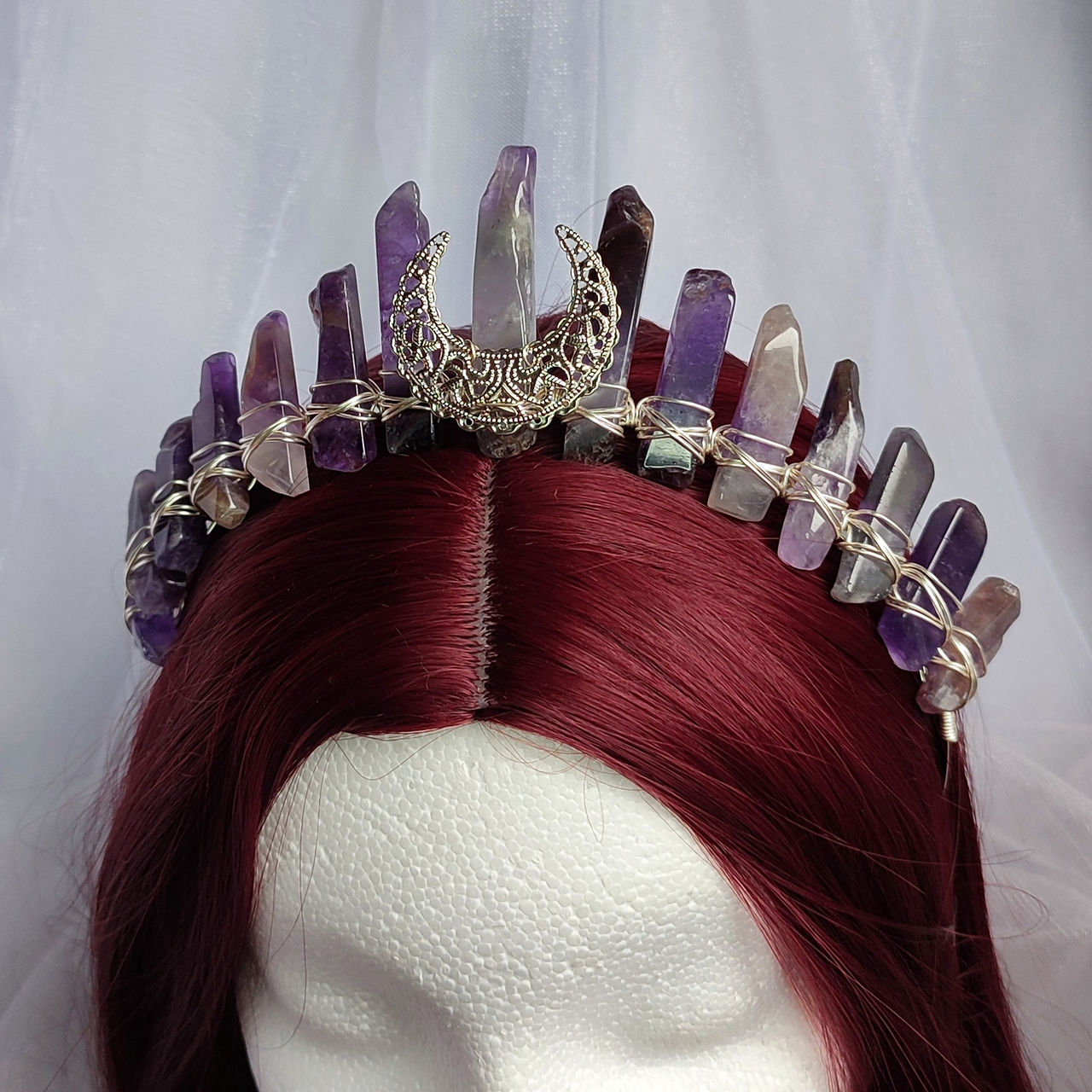
Dreamer Crown 
Amethyst Wire Wrapped Pendant 
Butterfly Amethyst Earrings
Rated at 7 on the Mohs scale of mineral hardness, amethyst is durable enough for daily wear, making it a popular choice for jewellery and decorative items. It's found in many countries around the world including Brazil, Uruguay, Sri Lanka, Canada, Zambia and Russia.
The stone's name is derived from the Greek word "amethystos", which means "not intoxicated" due to the ancient belief that it protected the owner from drunkenness. The myth surrounds Bacchus, the god of wine, fertility and revelry, who pursued a maiden named Amethyste.
Bacchus became enraged when Amethyste rejected his advances and, wishing to protect her maidenhood, she prayed to the goddess, Diana, who turned her into white quartz stone. In remorse of his actions, Bacchus poured wine over the stone which stained it purple.

Crystal Properties
To this day, amethyst remains a favourite gemstone due to its stunning colour and beneficial properties.
Mental and Emotional
Soothes emotions, making it fantastic for anxiety and insomnia. Purifies the mind to aid focus and concentration, bringing passion and creativity back to one's life. Promotes sobriety.
Physical
Strengthens the immune system and supports overall health and vitality in times of illness (mental, emotional, physical or spiritual). Provides relief from menstrual discomfort and regulates hormones to help with any imbalances. Eases headaches.
Spiritual
Cleanses the aura of negative energy and offers spiritual protection. Its association with the third eye chakra makes it a popular choice for meditation to enhance psychic abilities, clairvoyance and visions. It also resonates with the crown chakra, which is seen as white or violet, fostering connection to the higher self.
Related post: What Are Chakra Crystals and How Do I Use Them?

Myths and Beliefs
Due to myths surrounding the wine god, Bacchus, Ancient Greeks believed that amethyst would maintain their sobriety. They wore it as jewellery, carved drinking vessels from it and carried it in their mouths during festivities.
Amethyst was considered a stone of royalty and spirituality in the Middle Ages and adorned the garments of church leaders. Soldiers in Europe wore amethyst amulets for protection in battle, and it was also believed to protect against witchcraft and evil spirits.
Similarly, Ancient Egyptians carved amethyst into amulets and ornaments to represent divine protection from negative energies. Pharaohs wore it as a symbol of status, demonstrating wealth and a link to the gods.
In Ancient China, the colour of amethyst symbolised royalty, wisdom and spiritual strength. In modern times, it's used by Feng Shui practitioners to attract wealth and good fortune.
Tibetans use amethyst to make prayer beads in honour of Buddha.

How to Use Amethyst
Incorporating amethyst into your everyday life can be greatly beneficial in many areas. Here are some effective ways to utilise this powerful crystal:
Jewellery - Wearing amethyst keeps the crystal's purifying and protective energy close to you throughout the day. Consider Little Moon Tree's simple wire wrapped necklaces, rings, beaded bracelets or birthstones for February babies.
Meditation - Place amethyst crystals in your meditation area. The soothing qualities can help deepen your experience, promoting relaxation and a spiritual connection. You can also lay a stone on the third eye area to encourage interaction. Many sleep with amethyst under their pillow to relieve insomnia and encourage vivid dreams.
Home decor - Use amethyst geodes or clusters in your home as decorative ornaments. These not only enhance aesthetics but cleanse your space, inviting positive energy and dispelling the negative.
Crystal grids - Create a crystal grid combining amethyst with other crystals that align with your goals. Grids can serve as potent tools for manifesting intentions and enhancing energy flow.
Related post: How to Cleanse Your Crystals: 6 Effective Methods
Summary
Amethyst’s vibrant history and diverse properties make it a topic of interest for gemstone lovers and spiritual seekers. Whether you wear it, meditate with it or simply admire its beauty, incorporating it into your life can bring positive transformations on a personal and spiritual level. Amethyst is a crystal rich in depth and beauty, with a cultural significance that can be appreciated by all!
How do you like your amethyst? Raw or smooth, chevron or non-banded, necklace or ring? Comment with your favourite gemstone and why you feel drawn to it.


.jpg)
Comments